Sidecar · Hubs
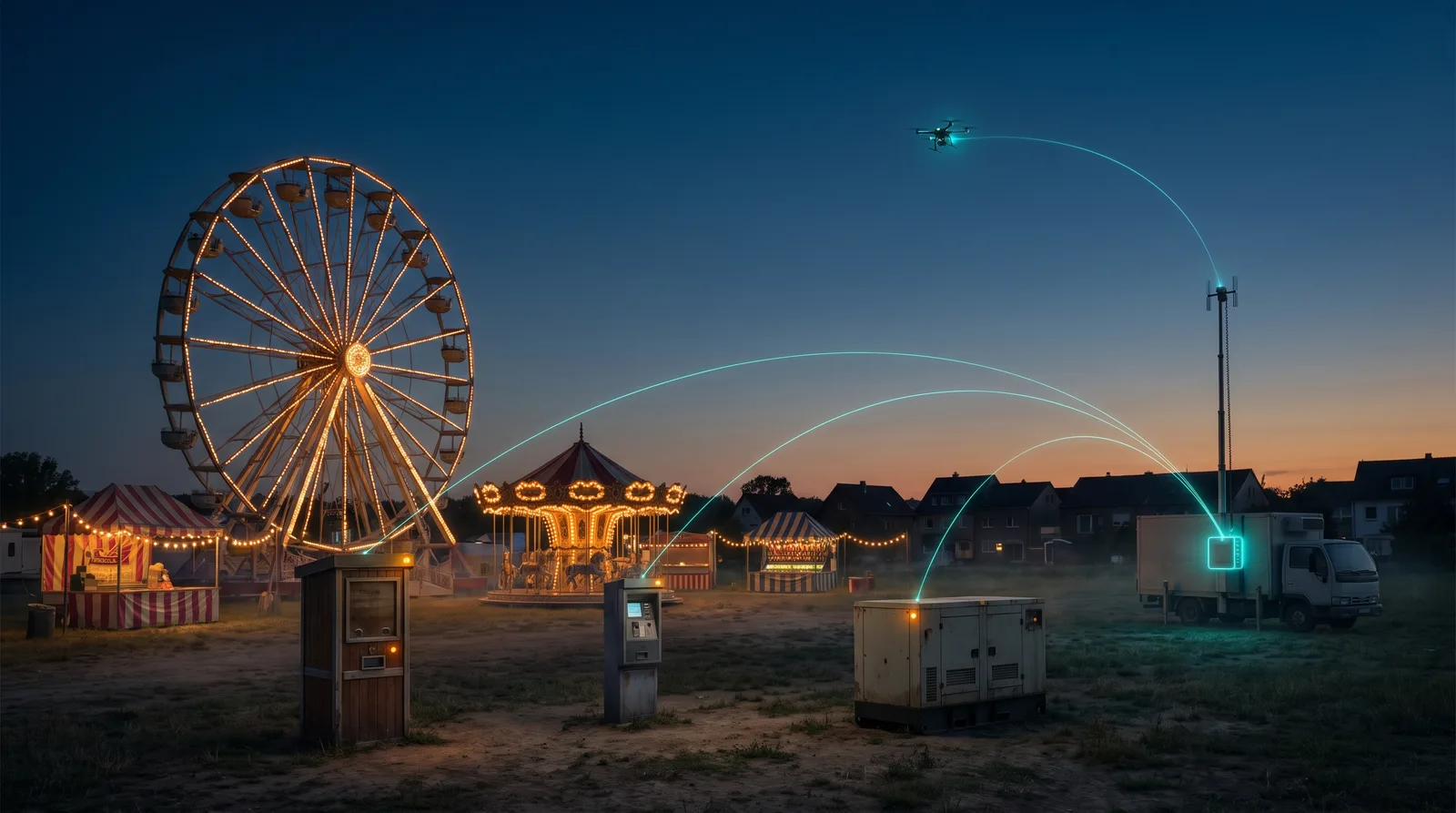
Sometimes the network can come to the device.
Traditional designs assume the device must reach permanent infrastructure, or permanent infrastructure must be built near the device. A Front Desk hub adds a third option: move the infrastructure, temporarily, to wherever the equipment is.
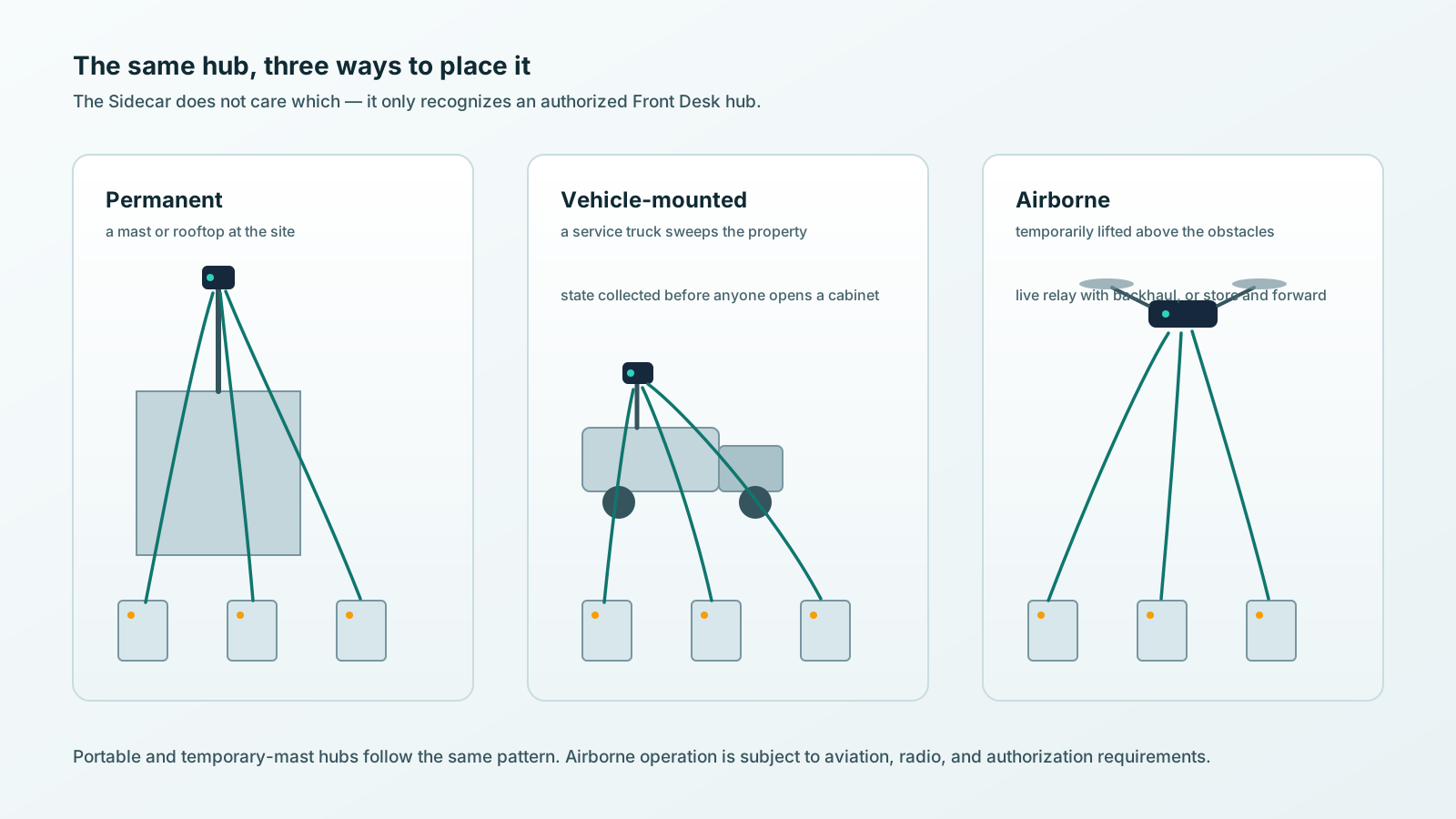
One hub, many shapes
The Sidecar doesn't care how the hub got there.
Permanent mast, service truck, technician's bag, temporary pole, or (where authorized) a drone: the endpoint only needs to recognize an authorized Front Desk hub. The architecture stays identical across every deployment method.
The drive-through visit
A technician arrives at a large property and the truck-mounted hub collects health, alarms, versions, and stored diagnostics from every device in range, before a single cabinet is opened. The visit becomes targeted maintenance instead of a blind inspection.
Store and forward
No live uplink? The hub holds reports locally and syncs when connectivity returns, and carries queued commands out to devices the same way. Intermittent sites stay manageable.
Above the obstacles
Radio hates terrain, buildings, and enclosures. A temporarily elevated hub, mast or airborne, can create a path where no ground-level path exists, using only the small amount of data management actually needs.
In damaged or disconnected areas (storms, floods, wide power failures), an authorized team can bring a hub to the site and immediately answer the questions that matter: which devices are alive, which report faults, which hold stored data, which need hands. The drone is not the product; it is one more place to put the hub. Airborne operation follows applicable aviation, radio, and authorization requirements.