Embedded & small boards
Reach a board behind any firewall. Forward nothing.
Raspberry Pi in a cabinet, TI board in a machine, i.MX module in the field: behind home routers, carrier NAT, and customer firewalls. Front Desk reaches them all the same way: the board calls out, and nothing is ever exposed.
The small-board problem
Port forwarding was never really an answer.
Dynamic IPs, carrier-grade NAT, routers you can't configure, sites you don't control. And even where forwarding is possible, a board with public SSH is a server you now have to defend. The usual workarounds trade one problem for a worse one.
No port forwarding
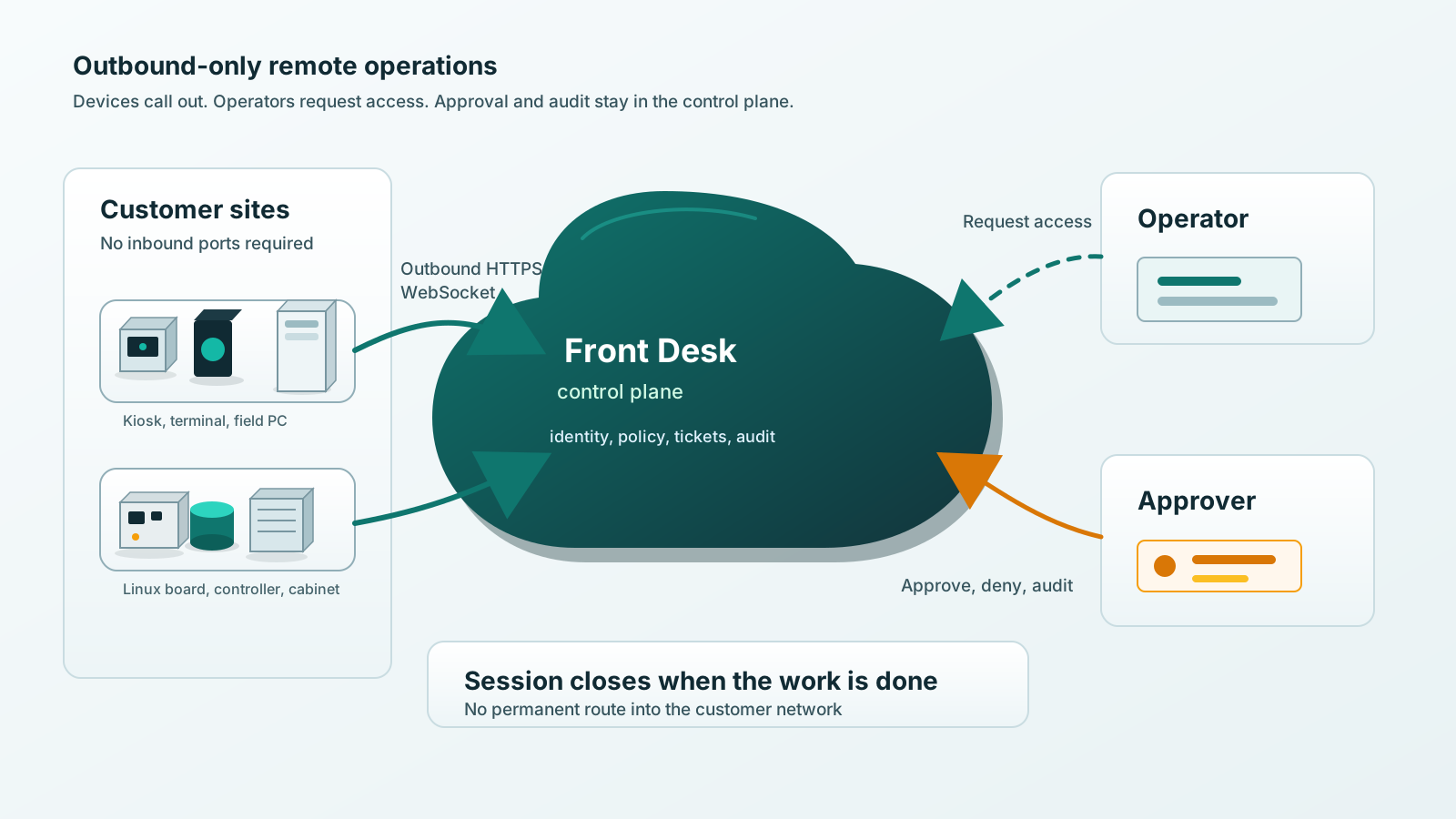
The board's agent makes outbound contact to Front Desk. It works behind NAT you will never see, on networks you will never administer.
SSH without public SSH
Terminal access is brokered through a short-lived session path. The SSH endpoint itself is never reachable from the internet.
The local page, remotely
Many boards serve an admin page on 127.0.0.1 or the device LAN. Front Desk can broker access to it, subject to account policy and approval.
How it flows
Outbound from the board, brokered in the middle, scoped at your end.
Runs where your firmware runs
- Raspberry Pi
- Orange Pi
- TI industrial boards
- NXP i.MX 8 family
- ARM 32 & 64-bit
- RISC-V
- Yocto-built images
- Low-memory devices
Exact support depends on the device OS, agent version, and account configuration. If your board needs an agent port, OS integration, or image packaging, our team does that work as part of deployment; custom programming and integration is part of the product, not an exception to it.
Board questions
Asked by people with boards in the field.
Can I reach a Raspberry Pi remotely without port forwarding?
Yes. The board runs a small agent that makes outbound contact to Front Desk, so it works behind home routers, carrier NAT, and site firewalls where port forwarding is impossible or unwise. No dynamic DNS, no exposed ports.
Do I have to expose SSH to the internet?
No. Front Desk brokers controlled access to the device or a local SSH endpoint through a short-lived session, without that endpoint ever being publicly reachable.
Which boards and operating systems fit?
Linux distributions and Yocto-built images across x86 (32/64-bit), ARM (32/64-bit), and RISC-V, including Raspberry Pi, Orange Pi, TI industrial boards, the NXP i.MX 8 family, and low-memory embedded boards. Exact support depends on the device OS and agent version.
Is this only for companies?
No. Fleets are the primary audience, but individuals and small teams use the same model for a home lab, a workshop PC, or a remote board where opening ports was never an acceptable answer.